
ADHD, movement, and breath control: 3 breathing techniques to make sustaining your exercising habit easier

If you have ADHD, you’ve probably been told some version of this before:
“Exercise will help you focus.”
“Movement is good for your brain.”
“Just go for a run - you’ll feel better.”
And while that’s not wrong, it’s also incomplete. Because for many people with ADHD, the hardest part of movement isn’t knowing it helps -it’s starting, keeping going, and not losing the habit halfway through.
That’s where breathing support comes in - not as a performance hack, but as a way to work with your nervous system, and give it an edge to stay consistent, which you maybe haven’t tried before.
Why movement matters for ADHD nervous systems
Let’s start with the beginning – why do so many ADHD-informed approaches agree that movement is vital for ADHD brains functioning?
You can think about it like this: your specific brain type is heavily capacity-dependent when it comes to accessing the things it needs to access, so it can help you function in your relationships, your job - or even your hobbies!

Think of things like motivation, executive functioning and regulation (emotional, physical, mental etc.). All of these depend less on effort, and more on how much internal capacity your system has available.
When capacity is high, things flow.
When capacity drops, everything feels harder – yes, even things you want to do.
How movement supports capacity
Movement helps ADHD nervous systems because it:
increases dopamine and norepinephrine (supporting focus and initiation)
discharges excess stress and emotional load
reduces energy spent on restlessness and rumination
rebuilds capacity for regulation
In other words: movement doesn’t demand capacity - it helps restore it.
But here’s the part that often gets missed:
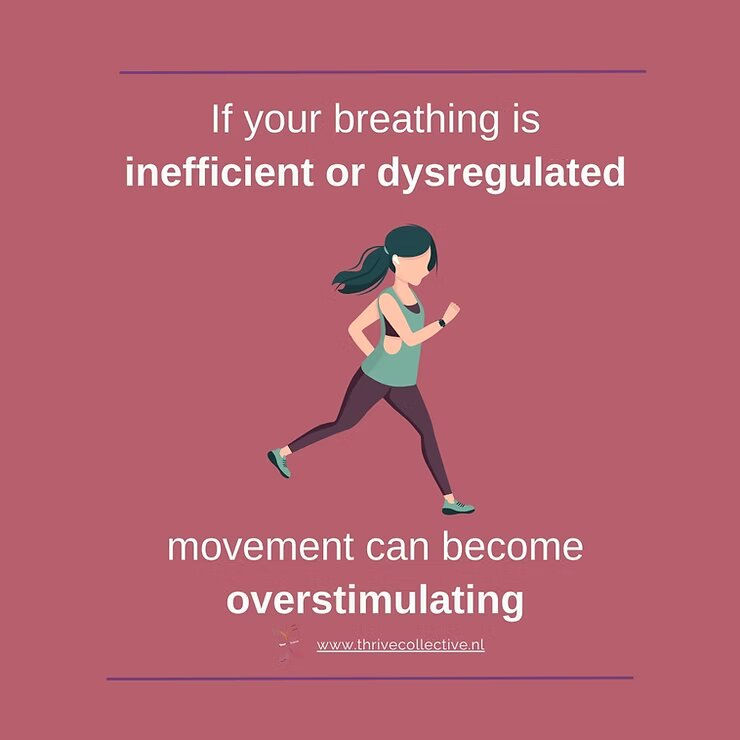
That’s why some people with ADHD:
feel breathless very quickly
quit exercise early
feel wired instead of calm after movement
struggle to stay consistent
The issue isn’t willpower. It’s how energy, breath, and nervous system load interact.
And that’s where learning supportive breathing techniques changes everything.
The 3 breathing elements that make movement sustainable

Breathing during movement isn’t just about oxygen. It’s about awareness, rhythm, and balance.
These three elements come directly from breathing science used in running and endurance work - and they translate beautifully to ADHD bodies.
1. Breath awareness: noticing without fixing
Before changing anything, notice:
Do you breathe through your nose or mouth?
Does your breath stay in your chest, belly, or flanks?
Is the emphasis on the inhale or the exhale?
Can you breathe in relaxed through your nose? And exhale with focus through your nose or mouth?
How does your body feel while breathing this way? If you can’t identify a word, let your body speak through sensation: is there a feeling of calm, of loosening - or, on the contrary - of tension, in your body?
For ADHD nervous systems, awareness alone can already help reduce overload.
2. Tempo and rhythm: matching breath to movement
Breathing has a rhythm - just like walking or running.
A simple way to explore your rhythm:
Count how many steps you inhale… Count how many steps you exhale…
Then ask yourself:
How many steps do I inhale and exhale? Equal? More of one, less of the other?
How much energy does this cost me?
Can I slow down my breath slightly?

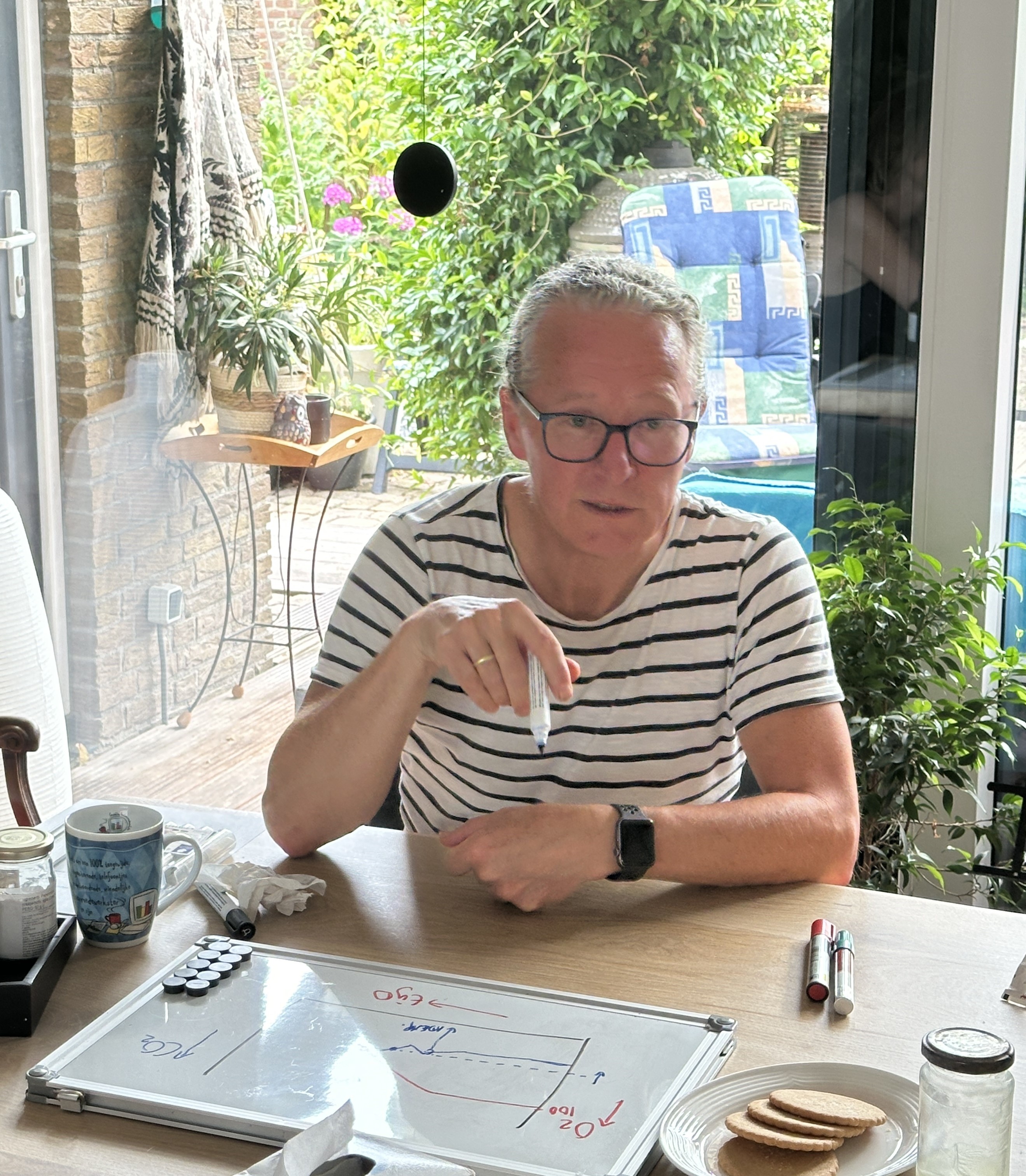
3. CO₂ balance: the misunderstood piece
We exhale to get rid of CO₂ that's released during combustion in our cells. Combustion that is needed to release energy into our muscles, making running and exercising possible.
What not everyone realizes is that you also need CO₂ for optimal oxygen uptake.
The breathing stimulus that occurs when you pause for a moment isn't due to a lack of oxygen, but to a "surplus" of CO₂. Where that point lies for you depends on what you've accustomed your body to - and raising that threshold is valuable.
Because to improve your performance, you need an optimal CO₂ balance. You achieve this by consciously breathing at an appropriate rate and rhythm, paying attention to your exhalation.

This matters hugely for ADHD nervous systems, which already tend toward urgency and reactivity.
The small step you can take to start today (without making it another task)
Don’t try to do everything at once. If you are ready to play around with this knowledge, start by picking up one of the three topics and experimenting: which breathing pattern works best for you?
Once you've developed a feel for all three aspects, start combining and varying them.
You'll find that breathing through your nose is difficult at first, and you might need to slow down a bit.
Once you've gotten used to it, you can increase your pace again - and perhaps even accelerate further or cover longer distances. Optimal breathing minimizes energy loss during breathing itself.
Because yes, breathing takes energy! And you use different muscles for it: your abdominal muscles, your diaphragm, your intercostal muscles, and sometimes even your neck muscles. The faster and more heavily you breathe, the more energy you lose. This can amount to up to 35% of the total energy you consume during running (65% being consumed by the muscles).

Calm breathing in through your nose and out through your mouth takes practice; eventually, you'll notice you have energy left over for running faster or longer. Exhaling through your nose is also fine, by the way - it reduces dehydration, for example.
While running, exhaling through your mouth has an advantage: your nasal passages produce more nitric oxide, which you then inhale (provided you inhale through your nose!), signaling your blood vessels to dilate. This allows more blood flow, and under optimal conditions, more oxygen and CO₂ are supplied and removed.
Over time, these small adjustments can radically change how movement feels in your body - and how sustainable it becomes. Curiosity is more important than discipline here.
Want support exploring this further?
There’s a lot more to discover about breathing and nervous system regulation - especially if ADHD, overwhelm, or stress are part of your life. If you feel ready for in-depth, personalized support, you can explore:
1:1 coaching sessions
workshops on different aspects of breath
guided breathing journeys toward calm and clarity
group or team-based breathing work
All designed to help you find the state of being your body actually needs.
This article is co-created by Martijn Stolker and Silvia Cosma, based on breathing principles and insights from Martijn Stolker’s original work on breath, movement, and performance, adapted here for ADHD and neurodivergent nervous systems.


Comments